EMT Practice Test

1. Question Content...


Question List

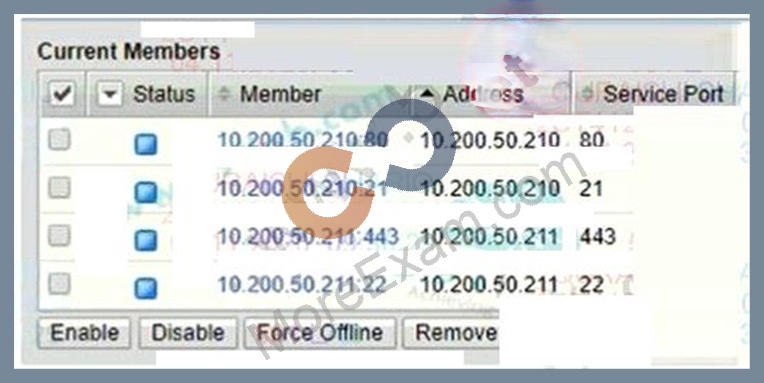
Question1: Refer to the exhibit.

A BIG-IP Administrator needs to configure health monitors for a newly configured server pool named Pool_B.
Which health monitor settings will ensure that all pool members will be accurately marked as available or unavailable?

Question2: A BIG-IP device is configured with both an internal external and two Corporate VLANs. The virtual server has SNAT enabled and is set to listen on all VLANs Auto Last Hop is disabled. The Corporate users are on
10.0.0.0./24 and 172.16.0.0/12. The BIG-IP has a Self-IP on the 1.0.0.0.0./24 subnet.
Internet users are able to access the virtual server. Only some of the Corporate users are able to connect to the virtual server A BIG-IP Administrator performs a tcpdump on the BIG-IP and verifies that traffic is arriving from users in 10.0.0.0/24.
What should the BIG-IP Administrator do to correct this behaviour?

Question3: How is persistence configured.
Question4: Some users who connect to a busy Virtual Server have connections reset by the BIG-IP system. Pool member resources are NOT a factor in this behavior. What is a possible cause for this behavior?

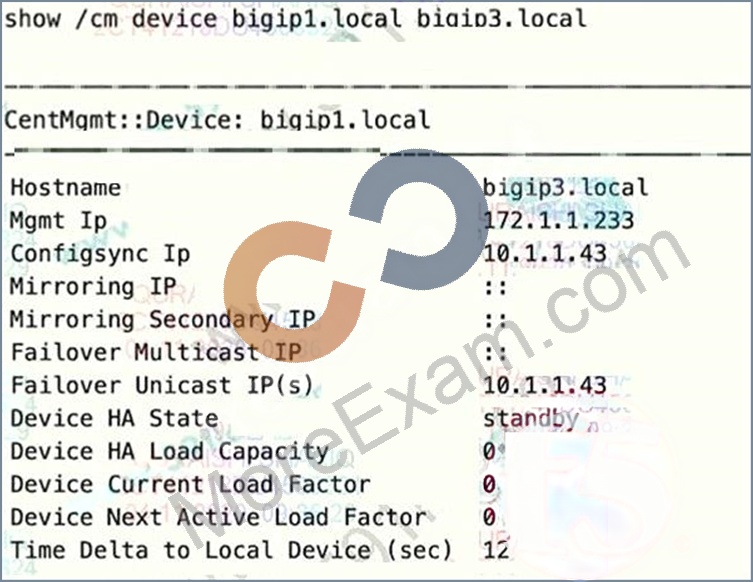
Question5: Refer of the exhibit.

The 816-IP Administrator runs the command shown and observes a device trust issue between BIG-IP devices in a device group. The issue prevents config sync on device bigip3.local.
What is preventing the config sync?

Question6: Refer to the exhibit.

How long will the persistence record remain in the table?

Question7: Assuming other failElover settings are at their default state, what would occur if the failElover cable were to be disconnected for five seconds and then reconnected.

Question8: When upgrading a BIGElIP redundant pair, what happens when one system has been updated but the other has not.

Question9: What is required for a virtual server to support clients whose traffic arrives on the internal VLAN and pool members whose traffic arrives on the external VLAN.

Question10: The BIG-IP Administrator creates a custom iRule that fails to work as expected. Which F5 online resource should the administrator use to help resolve this issue?

Question11: The current status of a given pool is offline (red). Which condition could explain that state? Assume the descriptions below include all monitors assigned for each scenario.

Question12: A BIG-IP Administrator uses a device group to share the workload and needs to perform service on a BIG-IP device currently active for a traffic group. The administrator needs to enable the traffic group to run on another BIG-IP device in the device group. What should the administrator do to meet the requirement?

Question13: A BIG-IP Administrator is working with a BIG-IP device and discovers that one of the Interfaces on a Trunk is DOWN.
What is the reason for this Interface status?

Question14: A BIG-IP Administrator explicitly creates a traffic group on a BIG-IP device.
Which two types of configuration objects can be associated with this traffic group? (Choose two.)

Question15: Which two can be a part of a virtual server's definition. (Choose two.)

Question16: A node is a member of various pools and hosts different web applications. If a web application is unavailable, the BIG-IP appliance needs to mark the pool member down for that application pool. What should a BIG-IP Administrator deploy at the pool level to accomplish this?

Question17: Users report that traffic is negatively affected every time a BIG-IP device fails over. The traffic becomes stabilized after a few minutes.
What should the BIG-IP Administrator do to reduce the impact of future failovers?

Question18: A BIG-IP Administrator configures a Virtual Server. Users report that they always receive a TCP RST packet to the BIG-IP system when attempting to connect to it. What is the possible reason for this issue?

Question19: Which statement describes a typical purpose of iRules.
Question20: A BIG-IP Administrator is receiving intermittent reports from users that SSL connections to the BIG-IP device are failing. Upon checking the log files, the BIG-IP Administrator notices the following error message:
ere tmm<instance>[<pid>]: 01260008:3: SSL transaction (TPS) rate limit reached After reviewing statistics, the BIG-IP Administrator notices there are a maximum of 1200 client-side SSL TPS and a maximum of 800 server-side SSL TPS.
What is the minimum SSL license limit capacity the BIG-IP Administrator should upgrade to handle this peak?

Question21: Generally speaking, should the monitor templates be used as production monitors or should they be customized prior to use.

Question22: DNS queries from two internal DNS servers are being load balanced to external DNS Servers via a Virtual Server on a BIG-P device. The DNS queries originate from 192.168.101.100 and 192.168.101.200 and target 192.168.21.50 All DNS queries destined for the external DNS Servers fail Which property change should the BIG-IP Administrator make in the Virtual Server to resolve this issue?

Question23: Assuming there are open connections through an active system's virtual servers and aEl fo av ielr occurs, by default, what happens to the connections.

Question24: Assume a client's traffic is being processed only by a NAT; no SNAT or virtual server processing takes place. Also assume that the NAT definition specifies a NAT address and an origin address while all other settings are left at their defaults. If a client were to initiate traffic to the NAT address, what changes, if any, would take place when the BIGElIP processes such packets.

Question25: A BIGJP Administrator needs to load a UCS file but must exclude the license file. How should the administrator perform this task?

Question26: A BIG-IP Administrator makes a configuration change to a Virtual Server on the Standby device of an HA pair. The HA pair is currently configured with Auto-Sync Enabled. What effect will the change have on the HA pair configuration?

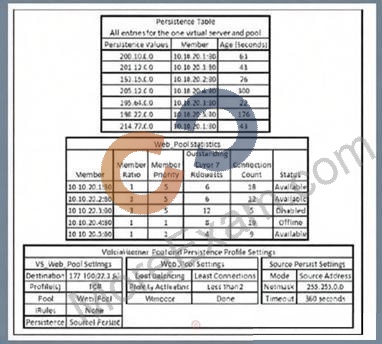
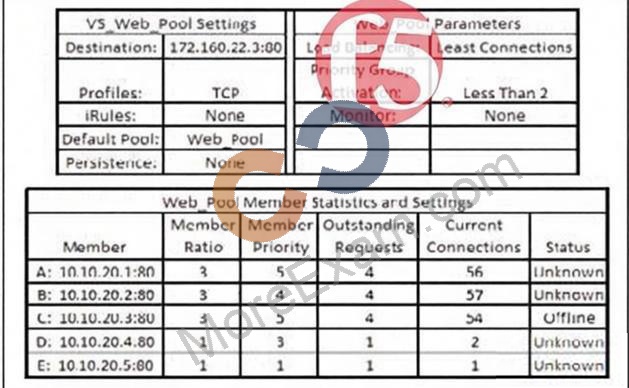
Question27: The incoming client IP address is 205.12.45.52. The last five connections have been sent to members C, D, A, B, B.
The incoming client. IP address is 205.12.45.52. The last five connections have been sent to members C, D, A, B, B.
Given the virtual server and pool definitions and the statistics shown in the graphic, which member will be used for the next connection.

Question28: Refer to the exhibit.

How long will the persistence record remain in the table?

Question29: Refer to the exhibit.

A BIG-IP Administrator creates a new Virtual Server. The end user is unable to access the page. During troubleshooting, the administrator learns that the connection between the BIG-IP system and server is NOT set up correctly.
What should the administrator do to solve this issue?

Question30: Which parameters are set to the same value when a pair of BIGElIP devices are synchronized.

Question31: Refer to the exhibit.

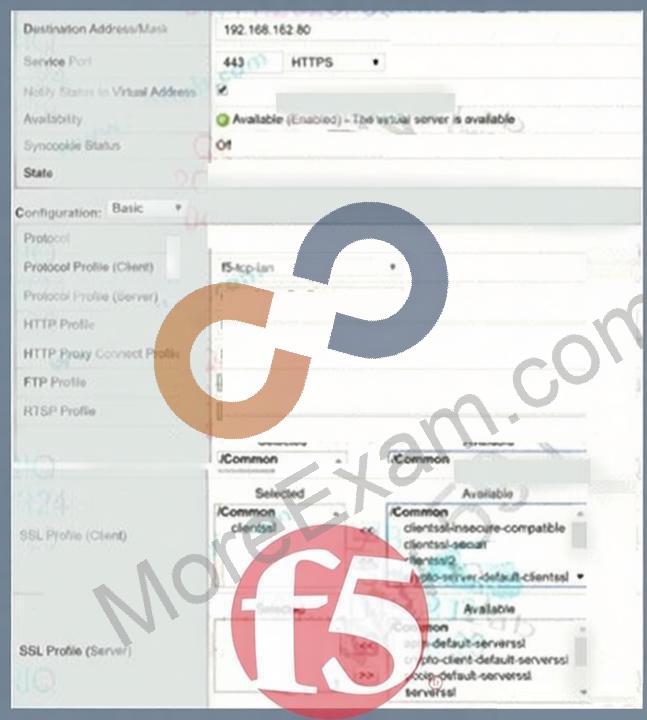
A BIG-IP Administrator needs to deploy an application on the BIG-IP system to perform SSL offload and re-encrypt the traffic to pool members.
During testing, users are unable to connect to the application.
What must the BIG-IP Administrator do to resolve the issue?

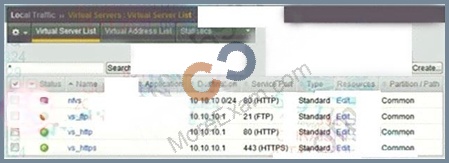
Question32: Refer to the exhibit.

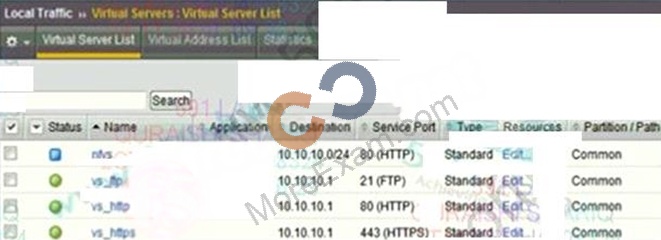
A user attempts to connect to 10.10.10.1.80 using FTP over SSL with an FTPS client. Which virtual server will match and attempt to process the request?

Question33: Which three statements describe a characteristic of profiles. (Choose three.)
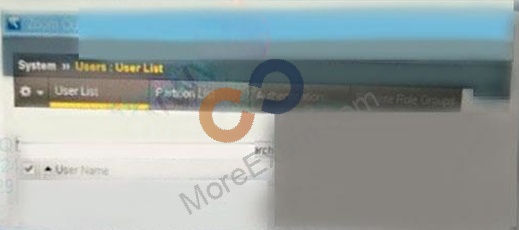
Question34: The BIG-IP Administrator needs to ensure the correct health monitor is being used lor a new HTTP pool named P_example.
Where should the BIG-IP Administrator validate these settings in the Configuration Utility?

Question35: A site would like to ensure that a given web server's default page is being served correctly prior to sending it client traffic. They assigned the default HTTP monitor to the pool. What would the member status be if it sent an unexpected response to the GET request.?

Question36: Refer to the exhibit.

According to the shown Configuration Utility stings What is the setting of the User Directory configuration under the Authentication submenu?

Question37: A BIG-IP Administrator defines a device Self IP . The Self IP is NOT reachable from the network. What should the BIG-IP Administrator verify first?

Question38: Users are unable to reach an application. The BIG-IP Administrator checks the Configuration Utility and observes that the Virtual Server has a red diamond in front of the status. What is causing this issue?

Question39: A BIG-IP Administrator runs the initial configuration wizard and learns that the NTP servers were invalid. In which area of the Configuration Utility should the BIG-IP Administrator update the list of configured NTP servers?

Question40: Refer to the exhibit.

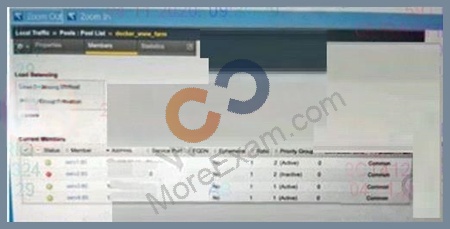
Which Pool Members are receiving traffic?

Question41: A BIG-IP Administrator uses backend servers to host multiple services per server. There are multiple virtual servers and pools defined, referencing the same backend servers.
Which load balancing algorithm is most appropriate to have an equal number of connections on each backend server?

Question42: A virtual server is listening at 10.10.1.100:any and has the following iRule associated with it: when CLIENT_ACCEPTED { if {[TCP::local_port] equals 80 } { pool pool1 } elseif {[TCP::local_port] equals 443} { pool pool2 } If a user connects to 10.10.1.100 and port 22, which pool will receive the request?

Question43: A custom HTTP monitor is failing to a pool member 10.10.3.75:8080 that serves up www.example.com.
A ping works to the pool member address.
The SEND string that the monitor is using is: GET/HTTP/l.l/r/n/Host.www.example.com/r/n/Connection Close/r/n/r/n Which CLI tool syntax will show that the web server returns the correct HTTP response?

Question44: A site would like to ensure that a given web server's default page is being served correctly prior to sending it client traffic. They assigned the A site would like to ensure that a given web server's default page is being served correctly prior to sending it client traffic. They.e assigned the default HTTP monitor to the pool. What would the member status be if it sent an unexpected response to the GET request. default HTTP monitor to the pool. What would the member. status be if it sent an unexpected response to the GET request.

Question45: A BIG-IP Administrator needs to view the CPU utilization of a particular Virtual Server. Which section of the Configuration Utility should the administrator use for this purpose?

Question46: A BIG-IP system has the following configuration:
* SNAT is set to Auto Map
* There are two VLANs internal and external
* Default route is pointed to the gateway on external VLAN
* Self P for internal VLAN is 1921.1.2
* Self IP for external VLAN is 192.1.2.2
* Floating IP addresses for internal VLAN is 192.1.1.1
* Floating IP addresses for external VLAN is 192.1.2.1
* The Virtual Server IP address is 192.1.1.100
Which IP address does the BIG-IP system use first when traffic reaches the servers on the internal VLAN?

Question47: A BIG-IP Administrator is unable to connect to the management interface via HTTPS. What is a possible reason for this issue?

Question48: How is persistence configured?
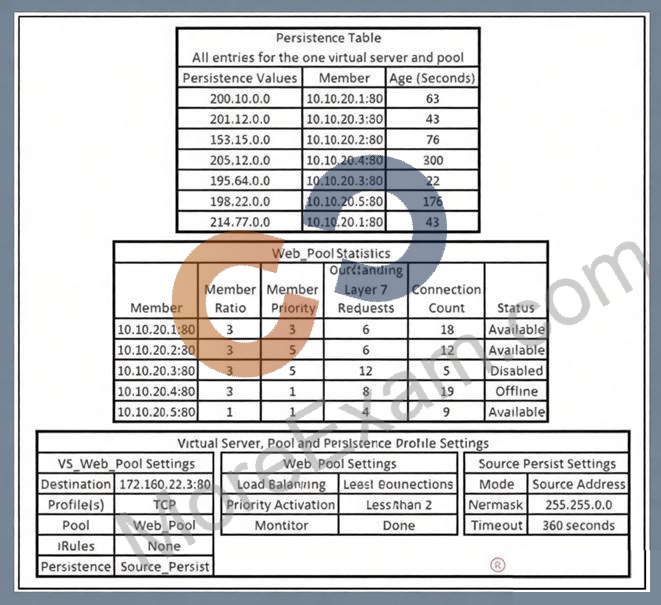
Question49: How should a BIG-IP Administrator control the amount of traffic that a newly enabled pool member receives.

Question50: Refer to the exhibit.

An organization is reporting slow performance accessing their Intranet website, hosted in a public cloud. All employees use a single Proxy Server with the public IP of 104.219.110.168 to connect to the Internet. What should the BIG-IP Administrator of the Intranet website do to fix this issue?

Question51: A BIG-IP device sends out the following SNMP trap:
big-ipo.f5.com - bigipExternalLinkChange Link: 1.0 is DOWN
Where in the BIG-IP Configuration utility should the BIG-IP Administrator verify the current status of Link
1.0?

Question52: What is the status of a pool member when manual resume is enabled and a health check first fails and then passes?

Question53: Which action will take place when a failover trigger is detected by the active system.
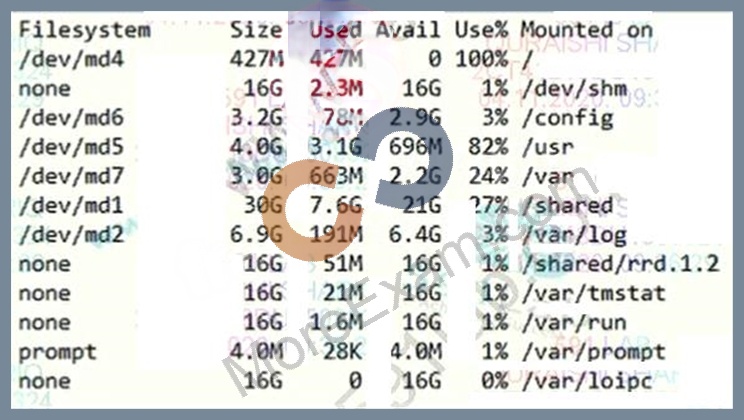
Question54: Refer to the exhibit.

The BIG-IP Administrator is investigating disk utilization on the BIG-IP device.
What should the BIG-IP Administrator check next?

Question55: A BIG-IP Administrator is setting up a new BIG-IP device. The network administrator reports that the interface has an incompatible media speed. The BIG-IP Administrator needs to change this setting manually.
From which location should the BIG-IP Administrator perform this task?

Question56: You have a pool of servers that need to be tested. All of the servers but one should be tested every 10 seconds, but one is slower and should only be tested every 20 seconds. How do you proceed.

Question57: Which two statements
describe differences
between the active and standby systems. (Choose two.)

Question58: How is MAC masquerading configured.

Question59: A BIG-IP Administrator plans to upgrade a BIG-IP device to the latest TMOS version.
Which two tools could the administrator leverage to verify known issues for the target versions?
(Choose two.)

Question60: Which log file should the BIG-IP Administrator check to determine if a specific user tried to log in to the
8IG-IP Configuration by utility?

Question61: Assume a BIG-IP has no NATs or SNATs configured. Which two scenarios are possible when client traffic arrives on a BIG-IP that is NOT destined to a self-IP? (Choose two.)

Question62: The 8IG-IP Administrator generates a qkview using "qkview -SO" and needs to transfer the output file via SCP.
Which directory contains the output file?

Question63: Refer to the exhibit.

Why is the virtual server responsive to incoming connections?

Question64: Refer to the exhibit.

A BIG-IP Administrator needs to fall over the active device. The administrator logs into the Configuration Unity and navigates to Device Management > Traffic Group. However, Force to Standby is greyed out What is causing this issue?

Question65: Which two statements are true about SNATs. (Choose two.)

Question66: Refer to the exhibit.
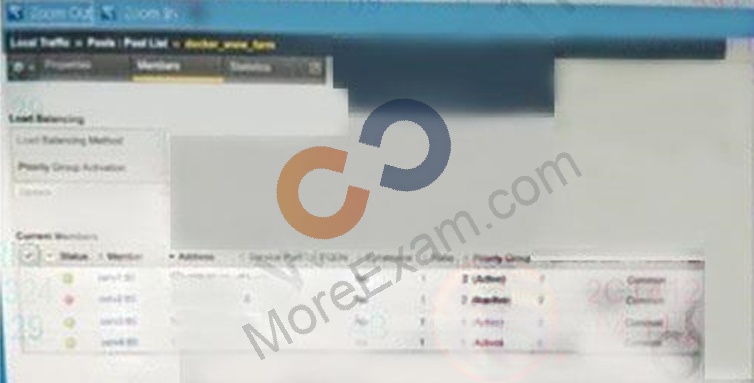
Which Pool Members are receiving traffic?
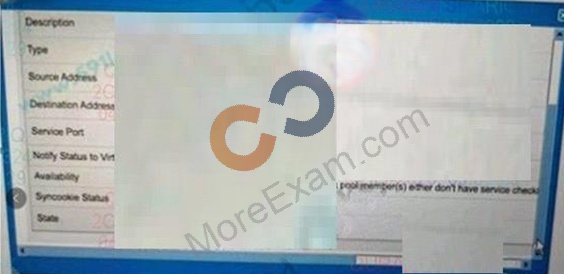
Question67: A Standard Virtual Server for a web application is configured with Automap for the Source Address Translation option. The original source address of the client must be known by the backend servers. What should the BIG-IP Administrator configure to meet this requirement?

Question68: Refer to the exhibit.

A BIG-IP Administrator configures the Virtual Server to pass HTTP traffic. Users report that they are unable to access the application What should the administrator do to resolve this issue?

Question69: How is persistence configured.

Question70: Which three properties can be assigned to nodes. (Choose three.)

Question71: Which method is recommended for creating a new user from the CLI?

Question72: Refer to the exhibit.
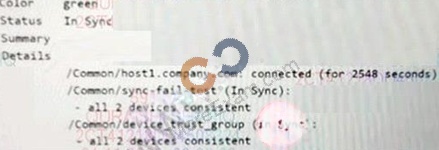
Which TMSH command generated this output?

Question73: A Standard Virtual Server for a web application is configured with Automap for the Source Address Translation option. The original source address of the client must be known by the backend servers. What should the BIG-IP Administrator configure to meet this requirement?

Question74: A BIG-IP Administrator reviews the log files to determine the cause of a recent problem and finds the following entry.
Mar 27.07.58.48 local/BIG-IP notice mcpd {5140} 010707275 Pool member 172.16.20.1.10029 monitor status down.
What is the cause of this log message?

Question75: Refer to the exhibit

A connection is being established to IP 1.1.1.1 on port 8080.
Which virtual server will handle the connection?

Question76: Refer to the exhibit.

A BIG-IP Administrator needs to configure health monitors for a newly configured server pool named Pool_B.
Which health monitor settings will ensure that all pool members will be accurately marked as available or unavailable?

Question77: A virtual server is listening at 10.10.1.100:80 and has the following iRule associated with it: when HTTP_REQUEST { if {[HTTP::uri] ends_with "txt" } { pool pool1 } elseif {[HTTP::uri] ends_with "php" } { pool pool2 } If a user connects to http://10.10.1.100/foo.html, which pool will receive the request?

Question78: What is the purpose of provisioning.

Question79: A site has assigned the ICMP
monitor to all nodes and a custom monitor, based on the HTTP template,
to a pool of web
servers. The HTTPElbased monitor
is working in all cases. The ICMP monitor is failing for 2 of the pool member 5 nodes. All other settings are default. What is the status of the monitor is working in all cases. The ICMP monitor is failing for 2 of the pool member. 5 nodes. All other settings are default. What is the status of the pool members.

Question80: Which type of Virtual Server requires the use of a FastL4 profile?
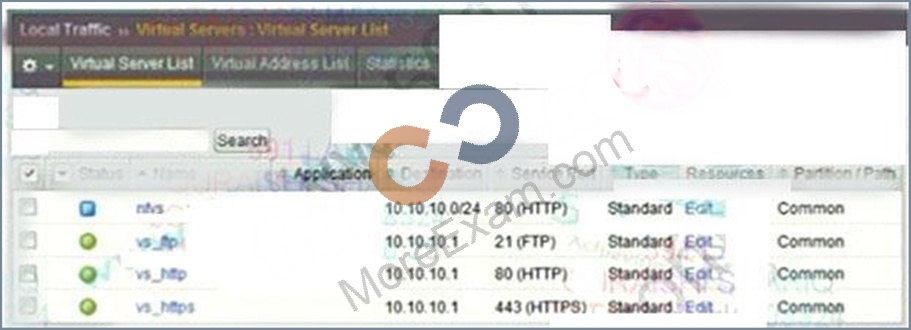
Question81: The ICMP monitor has been assigned to all nodes. In addition, all pools have been assigned custom monitors. The pool is marked available. If a pool is marked available (green) which situation is sufficient to cause this?

Question82: A site needs a virtual server that will use an iRule to parse HTTPS traffic based on HTTP header values. Which two profile types must be associated with such a virtual server. (Choose two.)

Question83: A BIG-IP Administrator receives an RMA replacement for a failed F5 device. The BIG-IP Administrator tries to restore a UCS taken from the previous device, but the restore fails. The following error appears inthe/var/log/itm.
mcpd [****J: ******;0; License is not operational (expired or digital signature does not match contents.) What should the BIG-IP Administrator do to avoid this error?

Question84: A BIG-IP Administrator is informed that traffic on Interface 1.1 is expected to increase over the maximum bandwidth capacity on the link. There is a single VLAN on the Interface. What should the 8IG-IP Administrator do to increase the total available bandwidth?

Question85: The BIG-IP Administrator disable all pool members in a pool Users are still able to reach the pool members.
What is allowing users to continue to reach the disabled poo! members?

Question86: Interface 1.2 on a BIG-IP VE has a status of UNINITIALIZED. What is the reason for this status?

Question87: Refer to the exhibit.

A user attempts to connect to 10.10.10.1.80 using FTP over SSL with an FTPS client. Which virtual server will match and attempt to process the request?

Question88: A standard virtual server is defined with a pool and a SNAT using automap. All other settings for the virtual server are at defaults. When client traffic is processed by the BIGElIP, what will occur to the IP addresses.

Question89: When can a single virtual server be associated with multiple profiles.

Question90: A BIG-IP Administrator needs to find which modules have been licensed for use on the BIG-IP system. In which section of the Configuration Utility can the BIG-IP Administrator find this information?

Question91: Which statement accurately describes the difference between two loadElbalancing modes specified as "member" and "node".

Question92: Which statement is true concerning iRule events.

Question93: A set of servers is used for an FTP application as well as an HTTP website via separate BIG-IP Pools. The server support team reports that some servers are receiving a lot more traffic than others.
Which Load Balancing Method should the BIG-IP Administrator apply to even out the connection count?

Question94: As a part of the Setup Utility, the administrator sets the host name for the BEl IGP.
What would be the result if the two systems in a redundant pair were set to the
same host name.

Question95: If a client's browser does not accept cookies, what occurs when the client connects to a virtual server using cookie persistence.

Question96: An LTM device has a virtual server mapped to www.f5.com with a pool assigned. Users report that when browsing, they are periodically required to re-login to /resources/201.1.7.b.2_l.com. The objects are defined as follows:
Virtual server. Destination 192.168.245.100:443 netmask 255.255.255.0
Persistence: SSL session persistence
Profiles: HTTP/TCP
Which persistence method should the BIG-IP Administrator apply to resolve this issue?

Question97: Refer to the exhibit.

How many nodes are represented on the network map shown?

Question98: A BIG-IP Administrator upgrades the BIG-IP LTM to a newer software version. After the administrator reboots into the new volume, the Configuration fails to load. Why is the Configuration failing to load?

Question99: A pool of four servers has been partially upgraded for two new servers with more memory and CPU capacity.
The BIG-IP Administrator must change the load balance method to consider more connections for the two new servers. Which load balancing method considers pool member CPU and memory load?

Question100: Administrative user accounts have been defined on the remote LDAP server and are unable to log in to the BIG-IP device.
Which log file should the BIG-IP Administrator check to find the related messages?

Question101: A BIG-IP Administrator needs to restore a UCS file to an F5 device using the Configuration Utility. Which section of the Configuration Utility should the BIG-IP Administrator access to perform this task?

Question102: When using the setup utility to configure a redundant pair, you are asked to provide a "Failover Peer IP". Which address is this.

Question103: A virtual server is listening at 10.10.1.100:80 and has the following
iRule associated with it: when HTTP_REQUEST { if {[HTTP::uri] ends_with "txt" } { pool pool1 } elseif {[HTTP::uri] ends_with "php" } { pool pool2 } If a user connects to http://10.10.1.100/foo.html, which pool will receive the request.

Question104: What should the 816-IP Administrator provide when opening a new ticket with F5 Support?
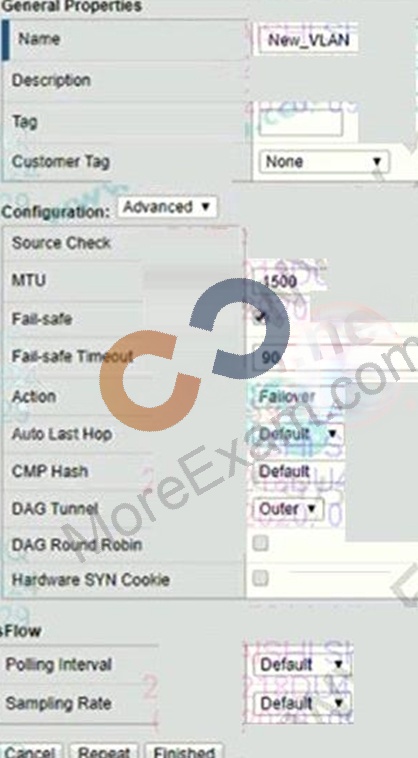
Question105: A BIG-IP Administrator creates a new VLAN on BIG-IP Cluster Member A and attaches an Interface to it. Although the Auto Config Sync is in place, the new VLAN does NOT show up on Cluster Member B.
What should the BIG-IP Administrator do to ensure the new VLAN is configured on each Cluster Member?

Question106: A BIG-IP Administrator notices that one of the servers that runs an application is NOT receiving any traffic. The BIG-IP Administrator examines the configuration status of the application and observes the displayed monitor configuration and affected Pool Member status. What is the possible cause of this issue?

Question107: Refer to the exhibit.

A BIG-IP Administrator configures a now VLAN on an HA pair of devices that does NOT yet have any traffic. This action causes the assigned traffic group to fail over to the standby device.
Which VLAN setting should be changed to prevent this issue?

Question108: A local user account (Users) on the BIG-IP device is assigned the User Manager role. Userl attempts to modify the properties of another account (User2), but the action fails. The BIG-IP Administrator can successfully modify the User2 account.
Assuming the principle of least privilege, what is the correct way to allow User 1 to modify User2 properties?

Question109: A BIG-IP Administrator adds new Pool Members into an existing, highly utilized pool. Soon after, there are reports that the application is failing to load for some users. What pool level setting should the BIG-IP Administrator check?

Question110: When configuring a Virtual Server to use an iRule with an HTTP_REQUEST event, which lists required steps in a proper order to create all necessary objects.

Question111: How should a BIG-IP Administrator control the amount of traffic that a newly enabled pool member receives.

Question112: A BIG-IP device sends out the following SNMP trap:
big-ipo.f5.com - bigipExternalLinkChange Link: 1.0 is DOWN
Where in the BIG-IP Configuration utility should the BIG-IP Administrator verify the current status of Link
1.0?

Question113: A site has six members in a pool. All of the servers have been designed, built, and configured with the same applications. It is known that each client's interactions vary significantly and can affect the performance of the servers.
If traffic should be sent to all members on a regular basis, which loadbalancing mode is most effective if the goal is to maintain a relatively even load across all servers?

Question114: Refer to the exhibit.

Which two pool members are eligible to receive new connections? (Choose two)

Question115: A BIG-IP Administrator remotely connects to the appliance via out-of-band management using
https://mybigip mycompany net. The management portal has been working all week. When the administrator attempts to login today, the connection times out. Which two aspects should the administrator verify? (Choose two)